Benefits of Stair Climber Workouts
Cardiovascular and Strength Benefits
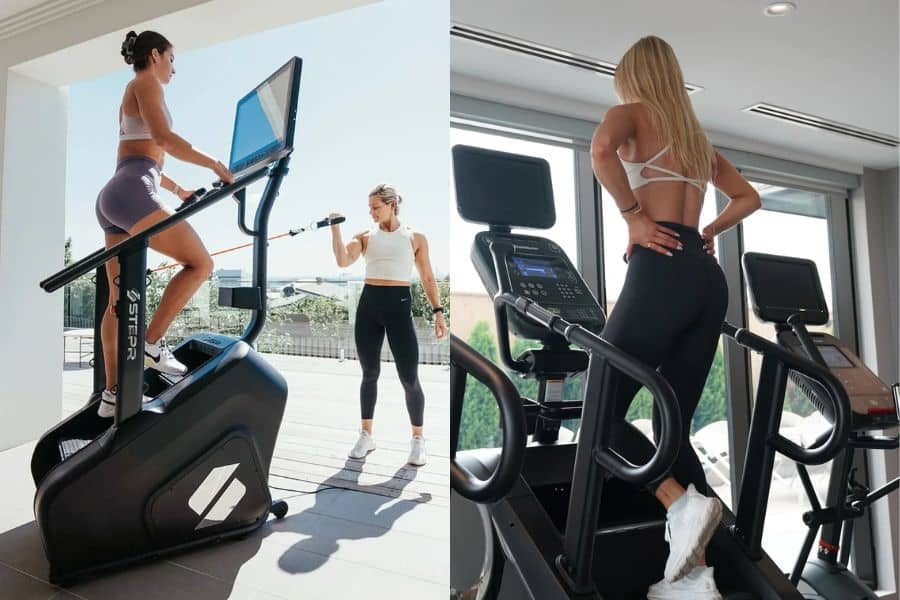
Jumping on a stair climber is like giving your heart and muscles a high-five. It gets every major muscle group in your body moving, from your legs to your core, and even your upper body if you throw in some resistance bands. It’s like a full-body party! This kind of workout not only builds muscle strength but also boosts your endurance.
And let’s not forget about your heart. Stair climbing is a fantastic way to get your ticker pumping. It cranks up your heart rate, which is great for your cardiovascular health. In fact, a study showed that college-age women who climbed stairs for 9 weeks saw their VO2max jump by 12%. That’s a fancy way of saying their hearts got a lot more efficient at doing their job.
Calorie Burning Potential
If you’re looking to torch some calories, the stair climber is your new best friend. Imagine burning around 344 calories in just half an hour if you weigh 190 pounds. That’s according to the American Council on Exercise. It’s a solid choice for anyone aiming to shed some pounds.
| Weight (lbs) | Calories Burned (30 mins) |
|---|---|
| 130 | 235 |
| 155 | 280 |
| 190 | 344 |
Plus, stair climbing is a budget-friendly way to get moving and lower your risk of heart disease and other health issues. You don’t need a fancy gym membership to get started, making it a great option for anyone wanting to boost their health without breaking the bank.
For more on how stair climbers can pump up your fitness game, check out our article on stair climber benefits. Curious about how stair climbing can help you lose weight? Head over to our page on stair climbing for weight loss.
Muscle Engagement and Injury Prevention
Core and Glute Activation
Hop on a stair climber, and you’re in for a workout that gets a whole bunch of muscles fired up. Your core and glutes are the stars of the show here. Balancing on this machine means your core muscles are working overtime, which is great for keeping your posture in check and saying goodbye to pesky lower back pain. Plus, it helps dodge injuries.
Your glutes get a serious workout too. The up-and-down motion targets those gluteal muscles, giving them a good toning and strengthening session. This can lead to a more defined lower body and a boost in overall strength.
| Muscle Group | Activation Level |
|---|---|
| Core | High |
| Glutes | High |
| Quadriceps | Moderate |
| Hamstrings | Moderate |
| Calves | Moderate |
Curious about how stair climbers can give your glutes a workout? Check out our article on stair climber for glutes workout.
Posture and Muscle Strengthening
Standing tall on a stair climber is key to getting the most out of your workout and keeping injuries at bay. Keep those shoulders back and your core engaged to make sure you’re working the right muscles without straining your back.
Stair climbing is a powerhouse for your quadriceps, hamstrings, calves, and glutes. These muscles get a good workout as you climb (Healthline). Not only does this build muscle strength, but it also helps with posture and body alignment.
Plus, stair climbing is a joint-friendly exercise. It can lower the risk of osteoporosis, strengthen bones, and ease stress on your knees compared to pounding the pavement (Healthline). It’s a solid choice for folks wanting to boost their fitness without overloading their joints.
Want more tips on keeping good posture and avoiding injuries on a stair climber? Swing by our article on stair climber workout tips.
By zeroing in on core and glute activation and keeping your posture in check, you can squeeze the most out of your stair climber workouts and steer clear of injuries. For more scoop on stair climber perks, check out our article on stair climber benefits.
Stair Climber vs. Running
Trying to pick between a stair climber and running for your endurance workout? Let’s break it down, focusing on how each affects your joints and muscles.
Impact on Joints
Running is like a party for your joints, but not the fun kind. It’s a high-impact exercise, meaning your knees and ankles take a beating. This can lead to injuries or make existing joint issues worse. On the flip side, the stair climber is the gentle giant of workouts, offering a low-impact aerobic session that’s kinder to your joints. If your knees are already grumbling or you just want to avoid future aches, the stair climber might be your new best friend.
| Exercise | Impact on Joints |
|---|---|
| Running | High |
| Stair Climber | Low |
Muscle Engagement Comparison
Both running and stair climbing get your muscles working, but they do it differently. Running is like a full-body workout party, inviting your core and upper body to join the leg action. Meanwhile, the stair climber is all about leg day, giving your glutes and quads a serious workout.
| Muscle Group | Running | Stair Climber |
|---|---|---|
| Glutes | Moderate | High |
| Quadriceps | Moderate | High |
| Hamstrings | High | Moderate |
| Calves | High | Moderate |
| Core | High | Moderate |
| Upper Body | High | Low |
Both exercises boost your heart health. Research shows that stair climbing and running can pump up your VO2max and overall cardiovascular efficiency. So, whether you’re climbing or running, your heart’s getting a workout.
Want to know more about stair climbers? Check out our article on stair climber benefits. Curious about how stair climbing can help you shed pounds? Visit stair climbing for weight loss.
Stair Climber for Weight Loss
Using a stair climber is a great way to shed some pounds and boost your health. Let’s chat about how many calories you can torch and how it gets your heart pumping.
Calorie Burn Comparison
Stair climbers are calorie-burning machines! They help you burn a bunch of calories in no time. How many? Well, it depends on your weight, how hard you’re working, and how long you keep at it.
| Weight (lbs) | Calories Burned (30 mins) |
|---|---|
| 125 | 180 – 260 |
| 180 | 260 – 344 |
| 190 | 344 |
According to Healthline, if you weigh 125 pounds, you can burn between 180 to 260 calories in just half an hour on a stair climber. Weigh 180 pounds? You’re looking at burning around 260 to 344 calories. And if you’re 190 pounds, you can burn about 344 calories in 30 minutes (Garage Gym Reviews).
Now, if you compare that to running, a 190-pound person running at 5 mph burns about 430 calories in 30 minutes. Crank it up to 8 mph, and you’re burning nearly 600 calories (Garage Gym Reviews). Running might burn more, but stair climbing is easier on the joints and still packs a calorie-burning punch.
Heart Rate Intensity
Stair climbers get your heart racing in no time, making them awesome for cardio and weight loss. They work a bunch of muscles, which means your heart rate goes up and you burn more calories.
Compared to other exercises like biking, stair climbing can really get your heart going (Gym Pros). This helps boost your endurance and helps you lose fat.
Want to get the most out of your stair climber? Try high-intensity interval training (HIIT). This means going all out for a bit, then taking it easy, and repeating. It’ll get your heart rate up and help you burn even more calories. For more on HIIT, check out our article on stair climber hiit workouts.
By knowing how many calories you can burn and how it affects your heart rate, you can use a stair climber to hit your weight loss goals. For more tips and workout ideas, visit our articles on stair climbing for weight loss and stair climber workout plans.
Stair Climber for Endurance Training
Boosting Your VO2 Max
Hopping on a stair climber is a fantastic way to crank up your endurance by giving your VO2 max a good workout. VO2 max is just a fancy term for how much oxygen your body can gulp down during a hardcore sweat session. To pump up your VO2 max, you gotta dive into some high-octane exercises that really test your limits. One of the best ways to do this is with the Norwegian 4×4 interval training method, which is like the holy grail for boosting VO2 max (STEPR).
How to Train for VO2 Max
The Norwegian 4×4 method is all about doing four rounds of high-intensity exercise for four minutes each, with a chill three-minute break in between. This routine is a game-changer for your heart and VO2 max because it keeps pushing your body’s oxygen limits (STEPR).
Here’s how you can rock this method on a stair climber:
- Warm-Up: Kick things off with a 10-minute warm-up at a chill pace to get your muscles and heart ready.
- High-Intensity Interval: Crank up the resistance and speed on the stair climber until you’re working at 90-95% of your max heart rate. Keep this up for four minutes.
- Recovery Interval: Dial down the resistance and speed to a comfy level, letting your heart rate drop to 60-70% of your max. Stick with this for three minutes.
- Repeat: Do four rounds of these high-intensity intervals, each followed by a recovery break.
- Cool Down: Wrap it up with a 10-minute cool-down at a low pace to help your body chill out.
| Interval Type | Duration | Intensity Level |
|---|---|---|
| Warm-Up | 10 minutes | Moderate |
| High-Intensity | 4 minutes | 90-95% max heart rate |
| Recovery | 3 minutes | 60-70% max heart rate |
| Repeat | 4 sets | – |
| Cool Down | 10 minutes | Low |
The stair climber is your best buddy for this kind of workout because you can easily tweak the intensity to match your needs. It’s perfect for high-intensity interval training (HIIT) like the Norwegian 4×4. With adjustable resistance, you can hit those high-intensity targets needed to boost your VO2 max (STEPR).
Want to know more about why stair climbers rock? Check out our article on stair climber benefits. If you’re hunting for workout plans, swing by stair climber workout plans for some killer routines.
Stair Climber Workout Tips
Proper Muscle Activation
Getting the most out of your stair climber means waking up the right muscles to boost your workout and dodge injuries. Your core and glutes are the MVPs here, keeping you steady and balanced. Engaging these muscles not only helps you stand tall but also keeps pesky back pain at bay (Healthline).
Here’s how to get those muscles fired up:
- Core Engagement: Keep those abs tight like you’re bracing for a punch. This keeps you steady and balanced.
- Glute Activation: Squeeze your glutes with every step. It’s like giving your lower back a supportive hug while toning up.
- Leg Muscles: Push through your heels, not your toes, to really work those hamstrings and calves.
Posture and Injury Prevention
Standing tall is key when you’re on the stair climber. Bad posture can lead to injuries and muscle issues (Women’s Health). Here’s how to keep your form in check:
- Upright Position: Keep your back straight, like you’re balancing a book on your head. This spreads your weight evenly and eases the load on your back.
- Shoulders Relaxed: Let your shoulders chill out, away from your ears. This keeps your neck and upper back from getting all tense.
- Hand Placement: Lightly rest your hands on the rails for balance, but don’t cling on for dear life. Let your core do the heavy lifting.
- Foot Placement: Plant your whole foot on each step to spread your weight and avoid toe and ankle strain.
Stick to these tips, and you’ll get the most out of your stair climber sessions while keeping injuries at bay. For more on why stair climbers rock, check out our article on stair climber benefits.
| Muscle Group | Activation Tips |
|---|---|
| Core | Keep abs tight, stabilize body |
| Glutes | Squeeze with each step, support lower back |
| Legs | Push through heels, engage hamstrings and calves |
Need more stair climber wisdom? Dive into our guides on stair climber workout plans and stair climber for glutes workout.