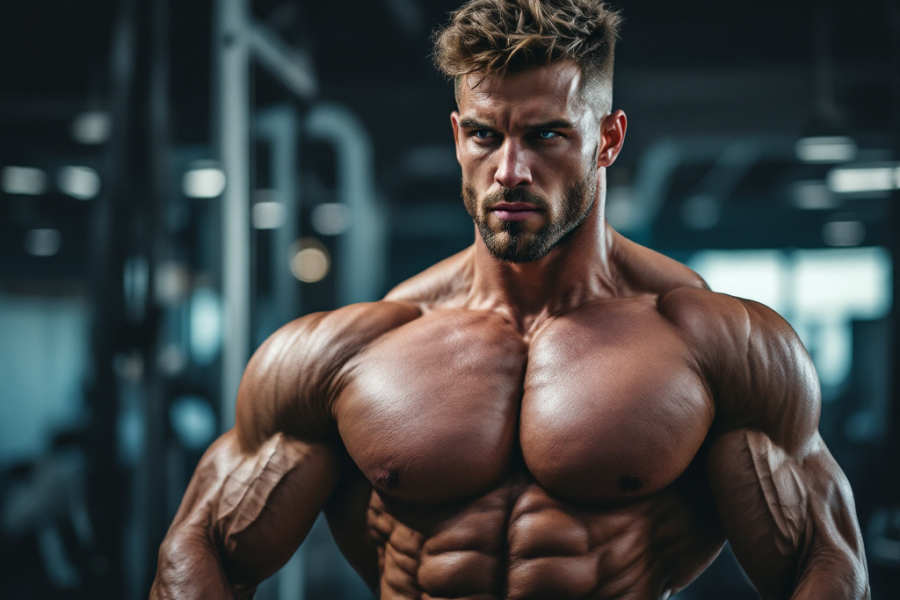
Build a stronger chest: why it matters
When you set your mind on the best chest exercises, you give your entire upper body a foundation of power, support, and stability. A strong chest isn’t just about aesthetics, it helps with everyday tasks—like pushing heavy doors—and boosts performance in activities ranging from sports to simple yard work. By targeting your pecs with a thoughtful mix of multi-joint and isolation movements, you can unlock serious muscle gains, improved posture, and better functional strength.
Even if you’re brand-new to chest training, you have plenty of options to suit your space and skill level. You’ll see tried-and-true moves like the bench press in almost every workout plan, but don’t overlook pushups or dips that can be done anywhere. Below, you’ll find a detailed breakdown of ten power-packed, research-backed exercises. Each one covers different angles and techniques to make sure you hit the upper, mid, and lower areas of your chest. Let’s get started.
1. Dumbbell bench press
Why the dumbbell bench press works
The dumbbell bench press is a staple that belongs on every list of the best chest exercises. Compared to a barbell, dumbbells let each side of your body work independently. This helps correct muscle imbalances and can reduce injury risk because you can adjust your arm path more naturally. According to a 2025 article from Men’s Health, using dumbbells provides a greater range of motion than barbells, which can boost muscle growth by keeping tension on the chest fibers longer [1].
Research suggests you can safely push near your limits during the dumbbell bench press because if a rep is too heavy, you can lower the weights without getting stuck under a bar. Plus, working with dumbbells forces your core and stabilizers to engage, adding an extra layer of total-body training.
How to do it
- Lie back on a flat bench with a dumbbell in each hand.
- Plant your feet firmly on the floor and brace your core.
- Lower the dumbbells to chest level, keeping your elbows at about a 45-degree angle from your torso.
- Pause briefly at the bottom, then press the weights upward until your arms are fully extended.
- Sets and reps: Aim for 3 or 4 sets of 6 to 8 reps if your goal is strength. For more muscle growth (hypertrophy), go for 8 to 12 reps.
- Pro tip: Use a controlled tempo on both the lowering and pressing phases to maximize time under tension.
2. Barbell bench press
Why the barbell bench press matters
For many lifters, the barbell bench press is the king of upper-body exercises. You can load more weight on a barbell than you typically can with dumbbells, which leads to bigger gains in pure strength and power. A 2025 feature in Men’s Journal highlights how the bench press activates not just your chest, but also your lats, glutes, core, and triceps for better overall functional strength [2].
Because you can handle heavy loads, this move builds mental confidence and real-world pushing power. It’s also a good exercise if you’re training with a spotter who can help pull the bar up if you get in trouble mid-rep.
How to do it
- Lie flat on a bench with your feet firmly on the ground.
- Grip the barbell slightly wider than shoulder-width apart, and extend your arms to unrack the bar.
- Lower the bar to your chest, keeping elbows tucked at about a 45-degree angle.
- Drive your feet into the floor and press the bar back to full extension.
- Sets and reps: Go for 3 to 5 sets of 3 to 6 reps if pure strength is your priority. For moderate muscle-building volume, use 8 to 10 reps.
- Pro tip: Squeeze your shoulder blades together as you descend to stabilize your upper back and create a solid pressing base.
3. Incline dumbbell bench press
Why the incline dumbbell bench press stands out
If you want that sought-after upper-chest definition, the incline dumbbell bench press is your friend. By adjusting the bench angle to about 30 to 45 degrees, you shift more emphasis to the clavicular head (upper portion) of your chest. This helps you develop a fuller, balanced look rather than just focusing on your mid-chest. According to Gymshark’s training tips, incline pressing with dumbbells increases range of motion and muscle stretch, which is ideal for hypertrophy [3].
How to do it
- Adjust your bench to a 30 to 45-degree incline.
- Grab a pair of dumbbells and hold them at shoulder height with palms facing forward.
- Plant your feet firmly on the ground and keep your core tight.
- Press the dumbbells upward, extending your arms without locking your elbows.
- Slowly lower the weights back to your shoulders.
- Sets and reps: Try 3 to 4 sets of 8 to 10 reps to build solid muscle in your upper chest [4].
- Pro tip: Don’t arch your lower back excessively. Tuck your chin slightly and keep your shoulders pinned to the bench.
4. Decline dumbbell bench press
Why the decline dumbbell bench press can help
While the incline press hits your upper chest, the decline version focuses on the often-neglected lower portion of your pectorals. Decline angles change the pressing path so you can emphasize the sternal head of the pecs. This can be as simple as adjusting your bench to a slight decline or even placing blocks under one end of a flat bench. According to a 2025 Men’s Journal article, working from different angles creates a three-dimensional look in your chest, helping you sculpt your pecs from top to bottom [2].
How to do it
- Set your bench to a decline position—usually around 15 to 20 degrees downward.
- Lie back and hook your feet under the bench supports to keep from sliding.
- Press the dumbbells up in a controlled motion.
- Lower the weights slowly until they’re at chest level, then repeat.
- Sets and reps: Perform 3 sets of 8 to 12 reps to train muscle endurance and hypertrophy.
- Pro tip: Focus on stability. A decline angle can place more stress on your shoulders if your form slips, so maintain a tight core and watch your elbow path.
5. Chest dip
Why chest dips build serious strength
Dips can be more challenging than they appear. By leaning forward and flaring your elbows slightly, you activate your lower chest and triceps together. Dips also demand a ton of core tension to keep your torso stable. If you lean more forward, you’ll feel a deeper stretch in your pecs. Gymshark notes that you can progress by adding a weight belt or even holding a dumbbell between your legs once bodyweight dips become easy [3].
How to do it
- Grasp the dip bars with your arms straight and elbows locked.
- Lean your torso forward, bend at the elbows, and lower your body until you feel a stretch in your chest.
- Drive back up in a controlled motion, squeezing your chest at the top.
- Sets and reps: Aim for 3 sets of as many dips as you can manage with good form. If you can do more than 12, consider adding resistance.
- Pro tip: Keep your shoulders down and avoid letting them creep up toward your ears. This helps prevent shoulder strain.
6. Pushup (and variations)
Why pushups are essential
Pushups remain one of the best exercises to build chest size, muscle, and strength at home [5]. They target your pecs similarly to a bench press by using your bodyweight as resistance. Even better, pushups force your entire body to stabilize, giving your abs, glutes, and shoulders a solid workout, too. If you’re a beginner, perfecting standard pushups creates a foundational strength you’ll need for more advanced moves.
How to do a standard pushup
- Start in a plank position, hands slightly wider than shoulder-width.
- Rotate your elbow pits forward, which helps externally rotate the shoulders.
- Keep your abs and glutes tight as you lower your chest to about an inch from the ground.
- Press back up to a full plank.
- Sets and reps: Try 3 sets of 8 to 15 reps, depending on your strength.
- Pro tip: Remove momentum by slowing down the eccentric (lowering) phase. Pause at the bottom for one or two seconds to ramp up muscle activation.
Advanced variations
- Archer pushups: Shift your weight side-to-side to place more load on one pectoral at a time.
- Single-arm pushups: Intensify the unilateral challenge further while boosting your core and glute engagement.
- Typewriter pushups: Lower toward one side, glide across center at the bottom, and then push up from the other side.
By incorporating more advanced pushups, you increase the challenge without needing extra equipment.
7. Dumbbell chest fly
Why the dumbbell chest fly is effective
The dumbbell chest fly is an isolation exercise that stretches and contracts your pecs through a large range of motion. Unlike presses, flys focus on horizontal adduction—pulling your arms in to meet at the midline—which emphasizes the chest’s squeeze. According to a 2025 Men’s Health article, adding 3 sets of 10 to 12 reps can maximize muscle engagement without relying on too much weight [4].
How to do it
- Lie on a flat bench with dumbbells held above your chest, palms facing each other.
- Keep a slight bend in your elbows as you open your arms out in a wide arc.
- Lower until you feel a stretch across your chest, but avoid going too deep to protect your shoulders.
- Bring your arms back toward the center, squeezing your chest at the top.
- Sets and reps: Aim for 3 sets of 10 to 12 reps. This moderate range helps hone the “mind-muscle” connection.
- Pro tip: Don’t lock your elbows completely. A soft bend helps keep tension in the pecs instead of shifting it to your arms or shoulder joints.
8. Cable crossover
Why cable crossovers help sculpt your chest
Cable crossovers let you isolate each side of your chest through constant tension. By holding the cable handles high, low, or straight out, you can target different areas of the pec. A 2025 Men’s Journal article notes that unilateral cable training is great for correcting muscle imbalances because you can adjust each arm’s path to match your natural range of motion [2].
How to do it
- Set the cable pulleys at roughly chest height (or slightly above or below to shift the focus).
- Stand in the cable station’s center and grab one handle in each hand.
- Step forward one foot for balance, leaning slightly forward.
- Keep a slight bend in your elbows as you bring your hands together in front of your body.
- Return to the start position slowly, feeling the tension through your chest.
- Sets and reps: Go for 3 or 4 sets of 10 to 15 reps, pausing briefly at the point of peak contraction.
- Pro tip: Experiment with staggered foot positions for better core stability and balance.
9. Dumbbell pullover
Why the dumbbell pullover is underrated
While the pullover is often viewed as a back exercise, it’s also a fantastic chest developer when done correctly. It targets your entire torso from shoulders to lats, while letting your pecs work hard as they stretch and pull the weight overhead. A July 24, 2024 guide from Gymreapers lists the pullover among the top finishes in a chest workout because it moves your arms through a wide arc, providing a unique method of loading the chest [6].
How to do it
- Lie perpendicular on a bench with your upper back supported, feet flat on the ground. Alternatively, lie fully on a bench.
- Hold a single dumbbell with both hands above your chest, arms slightly bent.
- Lower the weight in an arc behind your head until you feel a stretch in your chest and lats.
- Pull the dumbbell back up using your chest and upper arms, finishing directly above your chest.
- Sets and reps: Perform 2 to 4 sets of about 8 to 12 reps.
- Pro tip: Control is everything. Don’t let momentum take over, or you risk placing too much strain on your shoulders.
10. Dumbbell floor press
Why the dumbbell floor press is a great alternative
If you don’t have a bench, or your shoulders give you trouble on standard presses, try the dumbbell floor press. Men’s Health suggests this move to strengthen the chest with minimal shoulder strain, since your elbows stop at the floor instead of dipping into a deep stretch [4]. You still get a solid chest pump, and the limited range of motion can help you focus on the lockout portion of the press.
How to do it
- Grab two dumbbells and lie on your back on the floor, knees bent, feet flat.
- Position the dumbbells at chest height with your elbows resting on the floor.
- Press the weights straight up by extending your arms fully.
- Lower slowly until your triceps touch the floor, then press again.
- Sets and reps: 3 to 4 sets of 8 to 10 reps works well for a mix of strength and hypertrophy.
- Pro tip: Keep your elbows from flaring too wide. Maintain a neutral path to protect your shoulders and maximize chest activation.
Design your chest workout
You might be eager to try all of these moves right away, but smart programming is key. Here’s how you could combine multiple exercises to build a powerful and balanced routine:
- Begin with a heavy compound exercise—like the barbell bench press or dumbbell bench press—while you’re fresh.
- Add an incline or decline variation to hit different chest angles.
- Incorporate an isolation exercise like the cable crossover or dumbbell fly to thoroughly target the inner and outer pecs.
- Finish with a bodyweight challenge such as dips or pushups.
According to Gymreapers, 2 to 5 sets per exercise with rep ranges from 5 to 30 can cater to strength, hypertrophy, and even endurance—just adjust the load and rest times [6]. If you’re focusing on strength, stay in the 5 to 10 rep range. For muscle growth, stay more in the 10 to 20 range. You can even add techniques like pausing at the bottom to eliminate momentum or try advanced protocols like EMOM (every minute on the minute) sets.
Bring it all together
You have ten top-tier exercises, each proven to help grow and strengthen your chest. By varying angles and equipment—like dumbbells, barbells, cables, or just your own bodyweight—you’ll give your pecs a complete workout. Choose two to four moves per session, organize them logically, and track your progress. If you feel stuck or stop seeing gains, mix up your angles or work in a different rep range to keep challenging your muscles.
With consistency, proper form, and enough rest between sessions, you’ll notice a difference in as little as three to four weeks for performance, and in six to eight weeks for muscle size. Of course, dial in your nutrition and overall training plan to maximize your results. Now, it’s your move—pick the exercises that resonate with your goals, stay focused on technique, and watch the strength you build carry over into every part of your life.
References
- (Men’s Health)
- (Men’s Journal)
- (Gymshark)
- (Men’s Health)
- (Men’s Health)
- (Gymreapers)