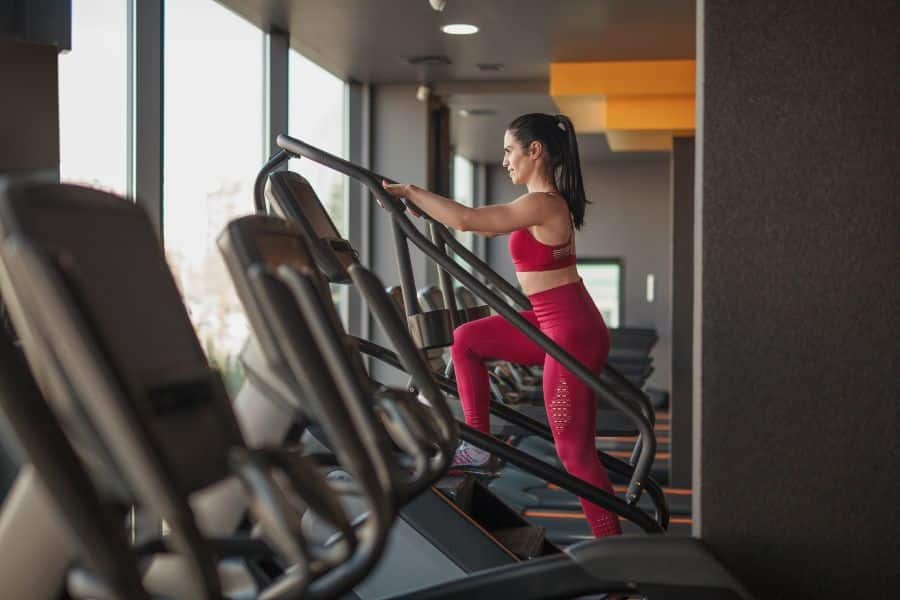
Benefits of Stair Climbing
Muscle Engagement and Calorie Burn
Stair climbing is like a secret weapon for your workout routine. It gets those muscles working hard, making it a top-notch exercise for torching calories and revving up your metabolism. When you’re on a stair climber, you’re not just standing there—you’re firing up your glutes, quads, calves, and hamstrings (Aaptiv). This all-around muscle action not only helps you drop those extra pounds but also builds up your muscle strength.
And let’s talk about calorie burn—it’s no joke. A study found that going up one step at a time burns about 8.5 calories a minute, while taking two steps at a time cranks it up to around 9.2 calories a minute (NCBI). So, if you’re looking to burn off some energy and maybe a few pounds, stair climbing is your go-to.
| Climbing Method | Calories Burned (kcal/min) |
|---|---|
| Single-Step Climbing | 8.5 |
| Double-Step Climbing | 9.2 |
Want to know more about how stair climbing can help you shed weight? Check out our article on stair climbing for weight loss.
Cardiovascular Health and Endurance
Stair climbing isn’t just about burning calories; it’s a heart hero too. Regularly hopping on a stair climber can do wonders for your heart by getting your heart rate up and boosting your cardiovascular endurance (Beconet). This kind of exercise strengthens your heart and lungs, making everyday tasks feel like a breeze and upping your overall fitness game.
Plus, stair climbing is a champ at building endurance. By pushing your body with this intense workout, you can up your stamina and improve your aerobic capacity. It’s a win-win for anyone wanting to boost their physical performance.
Curious about how stair climbing can pump up your cardiovascular fitness? Dive into our article on stair climber for cardiovascular fitness.
Adding stair climbing to your fitness routine means reaping a bunch of benefits, from muscle engagement and calorie burn to better heart health and endurance. For more tips and tricks, check out our stair climber workout plans and stair climber cardio workouts.
Maximizing Calorie Burn
Want to torch those calories on the stair climber? It’s all about cranking up the heart rate, pushing the intensity, and throwing in some cool tricks like a weighted vest and interval training. Let’s break it down.
Heart Rate and Intensity
To really get that calorie bonfire going, aim to keep your heart rate at 80% or more of its max. This magic number means your body keeps burning calories even after you’ve stepped off the machine. So, keep an eye on that heart rate and make sure you’re pushing yourself.
| Intensity Level | Heart Rate (% of Max) | Calorie Burn (per 30 mins) |
|---|---|---|
| Low | 50-60% | 180-220 |
| Moderate | 60-70% | 220-280 |
| High | 70-80% | 280-350 |
| Very High | 80-90% | 350-450 |
Curious about more stair climber tips? Check out our stair climber workout plans.
Weighted Vest and Interval Training
Strap on a weighted vest, and you’re in for a calorie-burning treat. Start light to avoid any “ouch” moments, and gradually add more weight. This extra load makes your muscles work harder, which means more calories burned.
| Weight of Vest | Additional Calorie Burn (per 30 mins) |
|---|---|
| 5 lbs | 30-50 |
| 10 lbs | 50-70 |
| 15 lbs | 70-90 |
| 20 lbs | 90-110 |
Interval training is another ace up your sleeve. Mix it up by going hard for a minute, then easing off for two. This not only burns more calories but also boosts your stamina and heart health.
For more interval training tips, swing by our stair climber interval training.
By keeping an eye on your heart rate, cranking up the intensity, and adding in a weighted vest and intervals, you’re on the fast track to smashing those fitness goals. Need more info? Check out our articles on stair climber benefits and stair climbing for weight loss.
Effective Stair Climbing Techniques
Want to get the most out of your stair climber workout? Let’s talk about how to do it right. We’ll cover posture, handrail use, and the difference between taking one step at a time versus two.
Posture and Handrail Usage
Standing tall is the name of the game when you’re on a stair climber. Good posture helps you work the right muscles and keeps you from getting hurt. Here’s how to keep your form in check:
- Stand up straight with your shoulders back and chest up.
- Tighten your core to protect your lower back.
- Keep your eyes forward, not on your feet.
Grabbing the handrails might seem like a good idea, but it can mess with your posture and balance, making your workout less effective. Use them only if you need a little help with balance, and try not to lean on them.
Single-Step vs. Double-Step Climbing
How you climb those stairs can change how many calories you burn and how effective your workout is. You can go one step at a time or two.
Single-Step Climbing
Taking it one step at a time is great for burning calories and working your muscles. A study says you burn about 8.5 calories a minute this way (NCBI). Climbing a 15-meter stairway burns more energy with single steps than with double steps.
| Climbing Method | Calories Burned (kcal/min) |
|---|---|
| Single-Step Climbing | 8.5±0.1 |
| Double-Step Climbing | 9.2±0.1 |
Double-Step Climbing
Going two steps at a time burns about 9.2 calories a minute (NCBI). But because you move faster, you end up using less energy overall for the same height.
Double-step climbing is more intense, but if you’re looking to burn calories over time, single-step is your best bet. If you’re using stair climbing to lose weight, stick with one step at a time.
By using these stair climbing tips, you can make your workout better and see more results. For more advice, check out our articles on stair climbing for weight loss and stair climber workout plans.
Health Benefits of Stair Climbing
Weight Loss and Mental Health
Stair climbing is a sneaky calorie-burner and a great way to shed some pounds. It gets your glutes, quads, and calves working hard, which means you’re torching more calories than you might think. According to Beconet, it even beats jogging in the calorie-burning department, making it a top pick for weight loss.
| Activity | Calories Burned (30 mins) |
|---|---|
| Stair Climbing | 300 – 500 |
| Jogging | 200 – 300 |
But wait, there’s more! Stair climbing isn’t just about trimming your waistline; it’s a mental health booster too. Regularly getting your heart pumping on the stairs can help kick stress, anxiety, and the blues to the curb. Those feel-good endorphins that flood your system during exercise can lift your spirits and give you a much-needed energy zap, especially if you’re dragging after lunch (Beconet).
Curious about how stair climbing can help you drop those extra pounds? Check out our article on stair climbing for weight loss.
VO2 Max and Aerobic Capacity
Stair climbing is also a champ when it comes to boosting your VO2 max, which is just a fancy way of saying it helps your body use oxygen better during exercise. A higher VO2 max means your heart and lungs are in tip-top shape, ready to take on whatever physical challenges you throw their way.
Regularly hitting the stairs can seriously up your VO2 max because it’s a high-intensity workout that really gets your heart racing. This boost in aerobic capacity can make you a superstar in other sports and activities too.
| Exercise | VO2 Max Improvement |
|---|---|
| Stair Climbing | High |
| Walking | Moderate |
| Cycling | Moderate |
Want to know more about how stair climbing can pump up your heart health? Dive into our article on stair climber for cardiovascular fitness.
Adding stair climbing to your daily routine is a wallet-friendly way to get healthier. It’s a workout you can do just about anywhere, making it perfect for anyone looking to get fit without breaking the bank. For more tips and tricks, swing by our section on stair climber workout plans.
Calorie Burn Accuracy
So, you’re curious about how many calories you’re really torching on that stair climber, huh? Well, you’re not alone. Getting the lowdown on calorie burn accuracy is key if you’re on a mission to shed some pounds or just boost your health game. But, heads up, there are a bunch of things that can mess with those numbers, especially if you’re relying on gadgets or the machine’s own estimates.
Factors Affecting Calorie Count
Let’s break it down. The calories you burn on a stair climber aren’t just about how fast you’re going or how long you’re at it. Nope, it’s a bit more personal than that. Your body makeup, how you move, and even your workout style all play a part. For instance, if you’re packing more muscle, you’re likely burning more calories than your less-muscular buddy doing the same routine.
And here’s a tip: how you use the machine matters. If you’re slouching over the console, you might be cutting your calorie burn in half (Shape). So, stand tall and keep that posture in check for a more accurate burn.
| Factor | Impact on Calorie Count |
|---|---|
| Body Composition | More muscle = more calories burned |
| Workout Form | Sloppy form = fewer calories burned |
| Efficiency | Smooth moves = more calories burned |
| Posture | Slouching = up to 50% fewer calories burned |
Wearable Trackers and Machine Overestimation
Now, about those fancy fitness trackers and the stair climber’s own readout—they’re not always spot-on. According to Verywell Fit, your wearable might be off by anywhere from 27% to a whopping 93% when it comes to counting calories during your sweat session. So, take those numbers with a pinch of skepticism.
And the stair climber itself? It can overestimate your calorie burn by about 20% (Shape). Many machines calculate the total energy you expend, not just the extra energy from the workout, which can make the numbers look better than they are. So, don’t let those inflated figures fool you.
| Device | Average Overestimation |
|---|---|
| Wearable Trackers | 27% – 93% |
| Stair Climbers | 20% |
Want to get the most out of your workout and keep those calorie counts real? Check out our articles on stair climber benefits and stair climbing for weight loss. By knowing what affects your calorie burn and being aware of the potential for error, you can make smarter choices about your fitness routine and hit those health goals.